You might not realize it, but two borrowers can take out the exact same loan and pay vastly different amounts over time. The only difference? Their credit scores. Your score quietly shapes every rate a lender offers you, and the gap between a good score and a poor one can cost you tens of thousands of dollars. Understanding exactly how that works could change every financial decision you make from here forward.

Table of Contents
In a Nutshell
- Higher credit scores unlock lower interest rates, potentially saving thousands of dollars over a loan’s lifetime.
- A $300,000 mortgage with poor credit can cost $150,000 more than one with excellent credit.
- Low credit scores often trigger larger down payment requirements, as lenders seek upfront capital to offset risk.
- Poor credit leads to higher closing costs through risk-based fee structures, including higher origination fees.
- Even a 40-point score improvement can lower rates by 0.5–1%, meaningfully reducing monthly payments.
What Is a Credit Score and How Is It Calculated?

A credit score is a three-digit number, typically ranging from 300 to 850, that lenders use to measure your creditworthiness.
Scoring models like FICO and VantageScore calculate it by analyzing your financial behavior across several factors: payment history carries the most weight, followed by credit utilization, credit longevity, credit mix, and account types.
Your credit score is shaped by payment history, utilization, longevity, credit mix, and account types.
Credit inquiries and credit reporting accuracy also influence your score.
While debt to income isn’t directly factored into scoring models, lenders still evaluate it separately.
Understanding what drives your score lets you make smarter borrowing decisions and reduce your overall loan costs.
Borrowers with low credit scores may still qualify for financing through government-backed mortgages like FHA and USDA loans, though these often come with higher interest rates and less favorable terms.
The Six Credit Score Tiers That Determine Your Loan Rate
Once you understand what shapes your credit score, the next step is knowing how lenders actually use that number to categorize you as a borrower.
Credit score tiers typically break down as follows: Exceptional (800–850), Very Good (740–799), Good (670–739), Fair (580–669), Poor (500–579), and Very Poor (300–499).
Each tier directly influences your loan rate. Moving from Fair to Good can save you hundreds annually in interest.
Lenders assign risk based on these tiers, so even a modest score improvement can shift you into a more favorable category and meaningfully reduce your borrowing costs. Those with poor credit history may also need to provide additional documentation proving their ability to make payments before a lender will approve their application.
How Lenders Decide What Interest Rate to Charge You

When lenders evaluate your loan application, they don’t rely solely on your credit score—they run it through a broader risk-pricing model that weighs multiple factors simultaneously.
Their lender risk assessment examines your debt-to-income ratio, employment stability, loan term, collateral value, and current market conditions.
These interest rate factors combine to produce a rate that reflects your specific risk profile. A strong credit score can lower your rate, but a high debt load or unstable income can offset that advantage.
Understanding this multi-variable process helps you identify exactly which financial levers you can pull to secure better loan terms. Borrowers with bad credit who pursue debt consolidation loans may still face higher interest rates even after combining their debts into a single payment.
The Real Dollar Difference Between Good and Bad Credit
Many borrowers underestimate how dramatically credit scores translate into real dollar costs over the life of a loan.
Consider a $300,000 mortgage: a borrower with excellent credit might secure a 6.5% rate, while someone with poor credit pays 8.5%. That 2% difference costs you roughly $150,000 more over 30 years.
The credit score impact on loan affordability isn’t abstract—it’s the difference between financial flexibility and chronic strain.
You’re not just paying a higher rate; you’re surrendering wealth. Improving your score before borrowing isn’t optional strategy—it’s essential financial discipline that directly preserves your purchasing power and long-term stability. Lenders typically offer lower rates on secured loans with collateral than on unsecured loans, making it worth exploring whether backing your loan with assets can offset the cost of a lower credit score.
Mortgage Loans: What Your Credit Score Actually Costs You
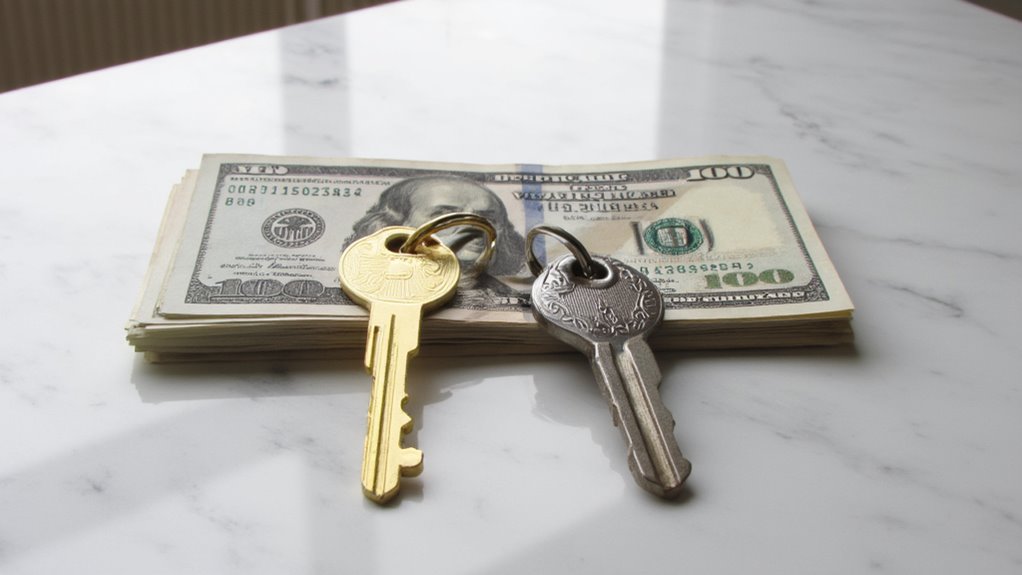
Three credit score tiers—excellent, fair, and poor—can separate your mortgage rate by as much as 3 percentage points, and on a 30-year loan, that gap compounds into a staggering wealth transfer from your pocket to your lender’s.
Consider a $300,000 mortgage: excellent credit secures roughly 6.5%, while poor credit triggers 9.5%. That’s a $600 monthly difference—over $216,000 across the loan’s life.
Credit score impacts don’t just affect your rate; they reshape your entire mortgage affordability equation, determining how much home you qualify for and how much long-term wealth you ultimately build or surrender.
Auto Loans: How Much More You’ll Pay With Bad Credit
Auto loans punish bad credit even faster than mortgages do, because lenders treat shorter-term vehicle financing as higher-risk exposure with less collateral stability.
Your credit score impact becomes immediately visible in the interest rate spread. Borrowers with excellent credit secure rates near 5%, while subprime borrowers often face 15–20% APR on identical vehicles.
On a $30,000 loan over 60 months, that difference costs you roughly $8,000 extra. Loan affordability deteriorates sharply because higher rates consume more of your monthly budget without building equity faster.
Improving your score before financing saves thousands in real, calculable dollars. While working toward better credit, cutting recurring costs like cable and unused subscriptions can free up cash to pay down debt faster and accelerate your score improvement.
Personal Loans: Interest Rate Ranges by Credit Tier

Personal loans expose credit score impact more starkly than secured lending because no collateral offsets the lender’s risk.
Your credit impact determines both loan eligibility and your rate tier:
Your credit score doesn’t just open doors—it decides how much you’ll pay to walk through them.
- Excellent (720+): 6%–12% APR
- Good (690–719): 13%–18% APR
- Fair (630–689): 19%–25% APR
- Poor (580–629): 26%–35% APR
- Bad (below 580): 36%+ APR or outright denial
A 140-point score difference can double your interest burden.
On a $10,000 loan, that gap costs you thousands over 36 months.
Your score isn’t just a number—it’s your borrowing price tag.
Borrowers looking to offset higher rates can also explore refinancing for lower interest once their credit improves, potentially saving thousands over the life of the loan.
Why Lenders Require Larger Down Payments for Low Credit Scores
Higher interest rates aren’t the only cost a low credit score triggers—lenders also use down payment requirements as a risk management tool.
When your credit score signals elevated risk, lenders require you to put more money down upfront, reducing their exposure if you default. This risk assessment logic is straightforward: a larger down payment means you’ve invested more of your own capital, making you less likely to walk away.
It also lowers the lender’s loan-to-value ratio, limiting potential losses. Fundamentally, you’re compensating for your credit history by absorbing more financial risk yourself before the loan even begins.
When Your Credit Score Gets Your Loan Application Denied

Beyond higher costs and stricter terms, a low credit score can disqualify you from borrowing entirely.
Lenders cite specific loan denial reasons when rejecting applications, including:
- Scores below minimum thresholds (often 620 for conventional loans)
- Excessive debt-to-income ratios compounded by poor credit
- Recent bankruptcies or foreclosures on your record
- Multiple hard inquiries signaling financial distress
- Credit report errors misrepresenting your actual creditworthiness
That last point matters most—credit report errors can trigger unjust denials.
Credit report errors don’t just hurt your score—they can block you from borrowing altogether, for reasons entirely within your control to fix.
Review your reports through AnnualCreditReport.com, dispute inaccuracies immediately, and you’ll eliminate preventable rejections before they cost you opportunities.
Extra Fees Borrowers With Poor Credit Pay at Closing
When you close a loan with poor credit, you’ll encounter several fees that borrowers with stronger scores simply don’t pay. Lenders justify these closing costs through risk-based fee structures tied directly to your credit impact score.
Expect higher origination fees, mandatory risk premiums, and stricter loan eligibility requirements that generate additional processing charges. Your borrower options narrow considerably, limiting your negotiation strategies with lenders who’ve already priced in your risk.
Lender transparency laws require disclosure of these charges, but they don’t eliminate them. Proper financial planning before applying helps you anticipate and potentially reduce these unavoidable closing expenses.
How Much You Save Over a Loan’s Life by Raising Your Score

Those closing costs sting, but they’re a one-time hit compared to what your credit score costs you across the full life of a loan.
The credit score impact on total repayment is where the real damage accumulates. Raising your score before borrowing produces measurable loan cost savings:
- A 620 vs. 760 score on a $300,000 mortgage can cost $90,000+ more in interest
- Even a 40-point improvement can drop your rate by 0.5–1%
- Lower rates reduce your monthly payment immediately
- Savings compound over 15–30 year terms
- Better scores eliminate PMI faster, cutting additional costs
The Credit Habits That Damage Your Score Most Before Borrowing
Certain financial behaviors can tank your credit score right before you need it most. Maxing out cards spikes your credit utilization, while late payments devastate your payment history instantly.
Each application triggers inquiry impact, shaving points temporarily. Carrying high debt levels signals risk to lenders. A thin credit mix weakens your profile, and short account age reduces score depth.
Default history and bankruptcy effects linger for years, compounding damage. Before borrowing, use credit monitoring to catch problems early.
Addressing these habits strategically protects your score and positions you for better loan terms and lower overall costs.
The Fastest Ways to Raise Your Credit Score Before You Apply

Raising your credit score quickly before applying for a loan requires targeting the factors that move the needle fastest. Smart debt management and disciplined budgeting strategies can shift your profile markedly within 30–60 days.
Targeting the right credit factors fast can shift your loan profile significantly in just 30–60 days.
- Reduce credit utilization below 30% by paying down revolving balances.
- Protect your payment history by clearing any overdue accounts immediately.
- Limit credit inquiries by avoiding new applications before loan pre-approval.
- Diversify your credit mix strategically if timeline permits.
- Use credit monitoring tools to track improvements and catch errors through active credit repair.
Financial literacy transforms these tactics into measurable score gains.
How to Check Your Credit Score Before Applying
Before you apply for any loan, you need to know exactly where your credit stands—and checking your score is simpler than most borrowers assume.
Visit AnnualCreditReport or other similar sites to pull your free reports from all three bureaus—Equifax, Experian, and TransUnion. Review each report for errors, since score accuracy depends entirely on clean, verified data. Dispute any inaccuracies before submitting a loan application.
For ongoing visibility, enroll in a credit monitoring service that alerts you to changes in real time. Knowing your score upfront lets you target lenders whose qualification thresholds match your profile, saving you time and unnecessary hard inquiries.
What to Do When Your Score Is Too Low to Qualify

When your credit check reveals a score that falls short of lender thresholds, you’ve got two realistic paths: wait and rebuild, or find alternative qualification routes. Strategic financial planning accelerates both options.
- Pursue credit repair by disputing errors and reducing utilization.
- Investigate loan alternatives like credit unions or secured lending.
- Engage credit counseling for structured debt management guidance.
- Apply budgeting tips and savings strategies to strengthen your profile.
- Attempt interest negotiation with lenders using documented income stability.
Each action compounds. Addressing one weakness typically improves multiple qualification factors simultaneously, shortening your timeline considerably. Building an emergency fund provides lenders with evidence of financial responsibility and protects you from taking on additional debt during the rebuilding process.
Frequent Questions and Answers
Can a Co-Signer Help You Qualify for a Loan With Bad Credit?
Yes, a co-signer can help you qualify for a loan with bad credit. You’ll gain co-signer benefits like better rates, and it’s an opportunity for credit improvement as you make consistent, on-time payments.
Do Different Lenders Use Different Credit Scoring Models for Approvals?
Like a fingerprint, each lender’s credit scoring model is unique. You’ll find that lender preferences shape approval criteria differently, as they’re conducting their own risk assessment, meaning your application’s outcome can vary across institutions.
How Long Does a Hard Inquiry Affect Your Credit Score?
A hard inquiry duration typically spans two years on your credit report, but its credit score impact diminishes considerably after 12 months. You’ll usually see only a minor initial drop of around five points.
Can You Negotiate a Lower Interest Rate After Loan Approval?
Yes, you can negotiate a lower interest rate after approval. Use loan approval strategies like presenting competing offers or improving your credit score. Interest rate negotiation works best when you’ve strengthened your financial profile beforehand.
Does Getting Pre-Approved for Loans Hurt Your Credit Score?
Like a soft footprint in sand, pre-approval’s impact is minimal. You’ll face a soft inquiry, not a hard pull—clearing up credit score misconceptions: your score drops only when you formally apply and lenders conduct hard checks.
Conclusion
Your credit score isn’t just a number—it’s a pricing mechanism lenders use against you. The theory that “good credit saves money” isn’t merely conventional wisdom; it’s mathematically proven. Compare a 620 versus 760 score on a 30-year mortgage, and you’ll find tens of thousands in additional interest payments. You’re not just building credit—you’re determining how much borrowing will ultimately cost you.